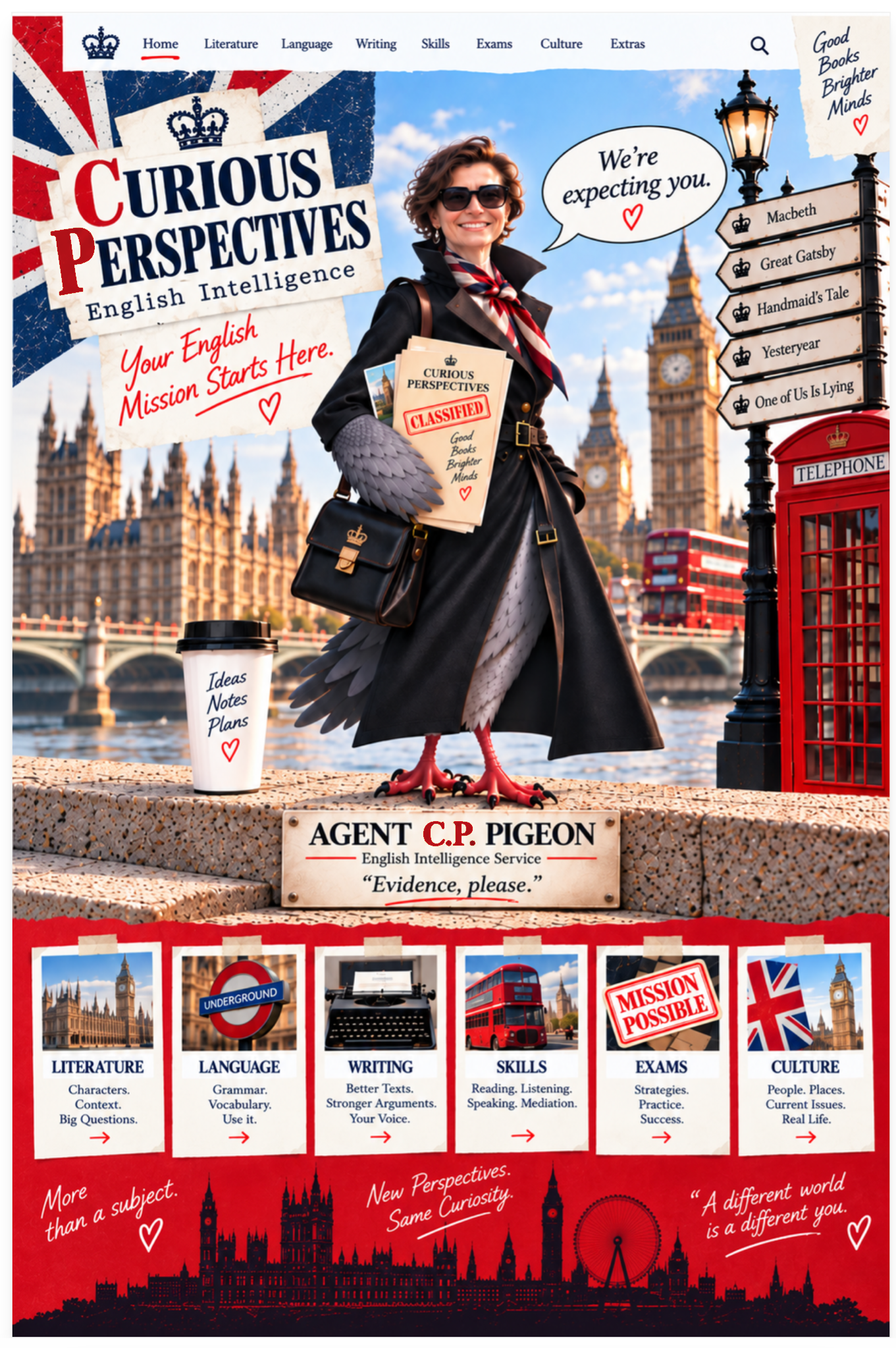
This is not another study guide.
We don't do plot summaries particularly well here. The internet has plenty of those.
the summary ends.
Some questions are serious. Some are strange. Some are worth carrying around for a while.
Have an opinion. Be unsure. Change your mind.
If something looks real, does it matter if it isn’t?
Choose where to look.
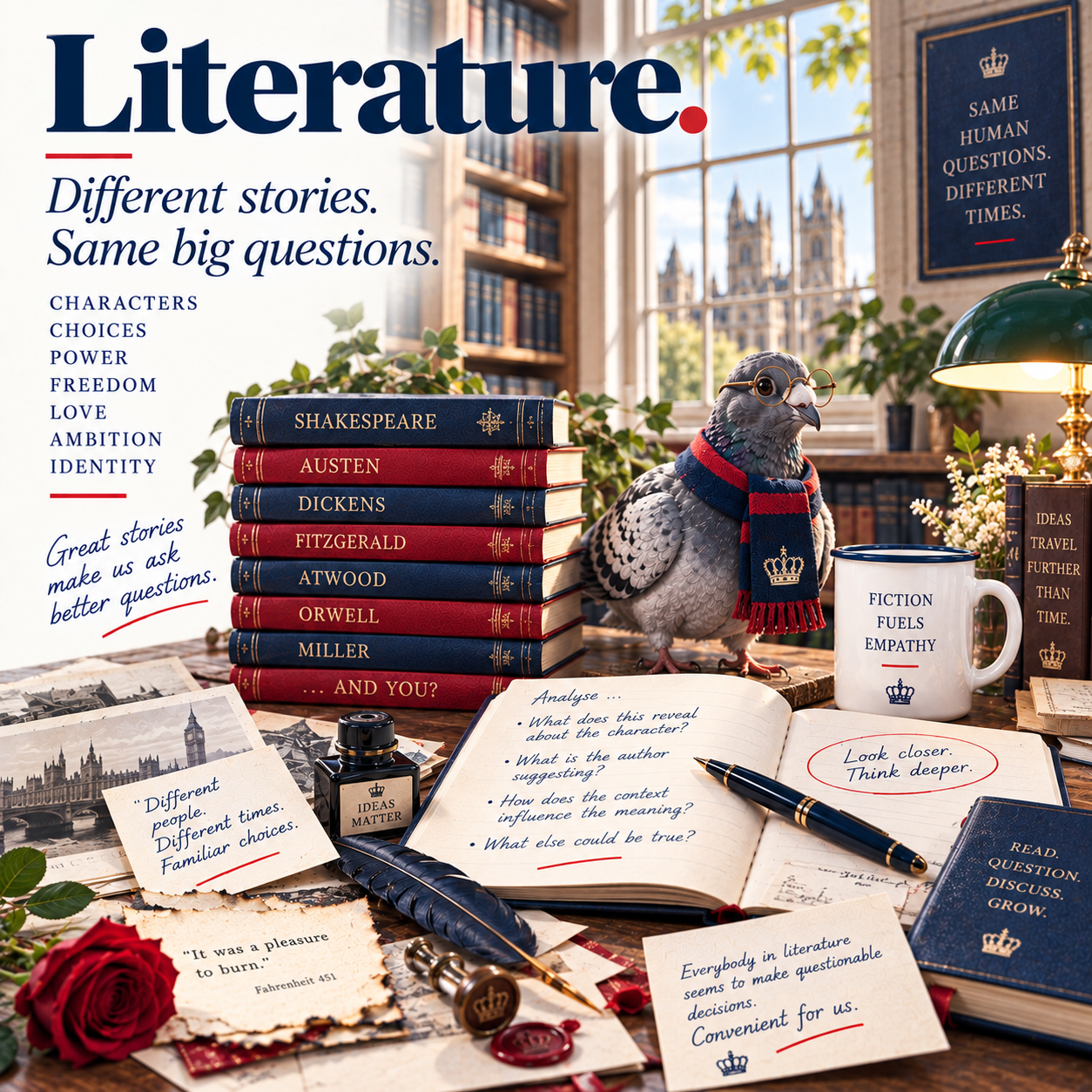 ⌕
⌕Case Files
Characters without model characterisations. Evidence, contradictions, perspectives and questions worth arguing about.
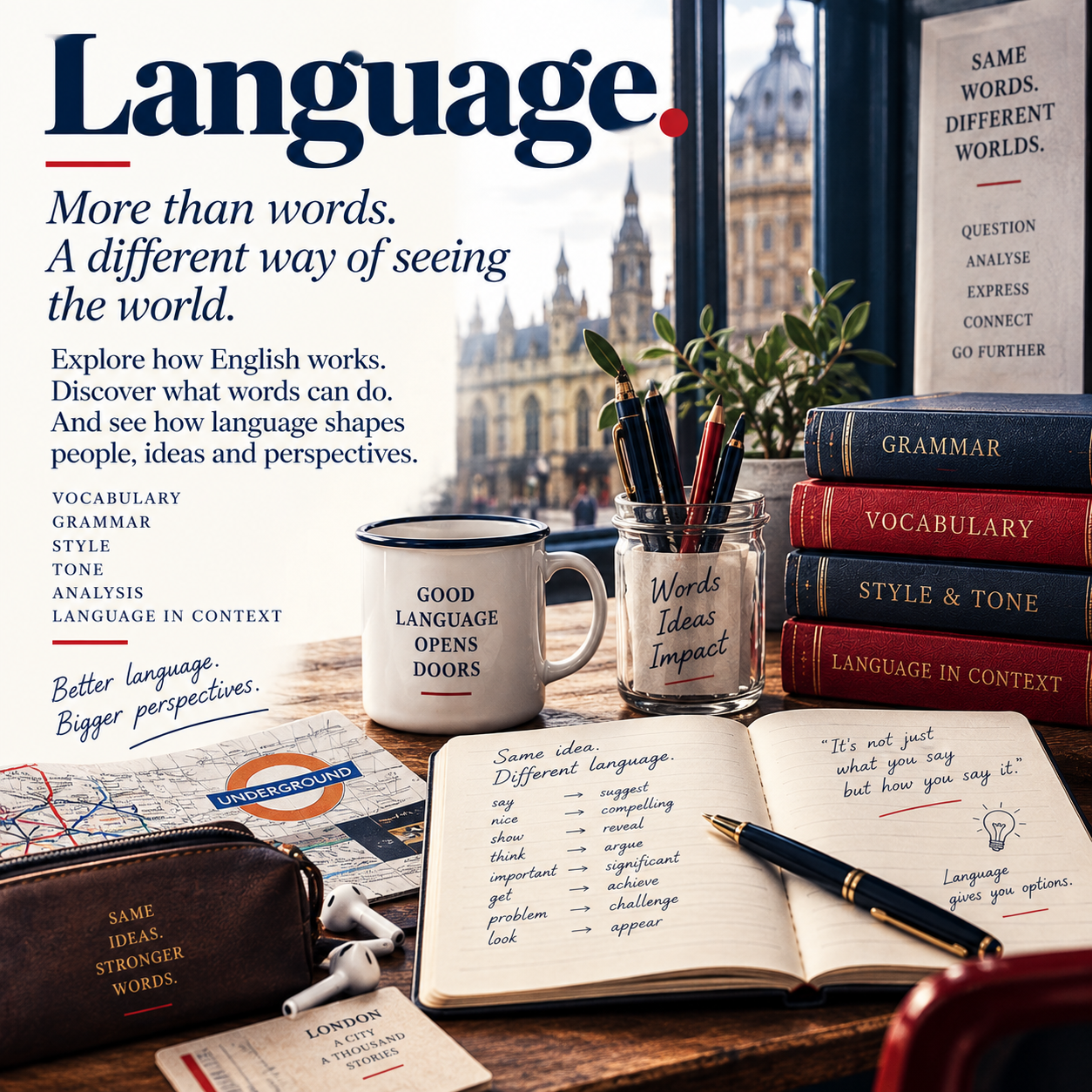 ✎
✎Language under Investigation
Not vocabulary sheets. Look at how language creates tone, power, ambiguity, persuasion — and sometimes trouble.
 ✒
✒Your Voice
How do you make an argument sharper, more precise and more convincingly yours — without turning it into a template?
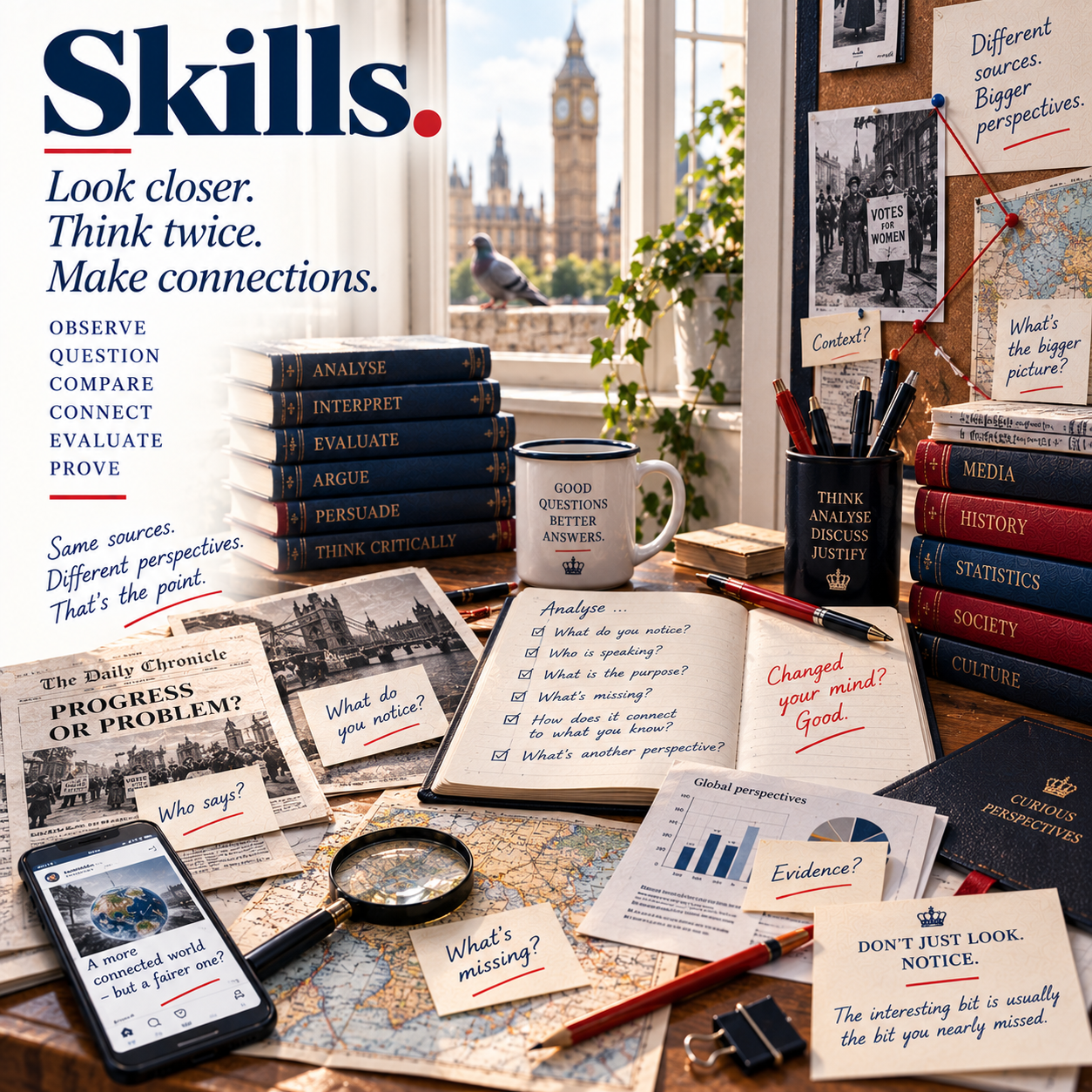 ⌘
⌘Look. Listen. Question.
Read beyond the obvious. Notice what is missing. Decide what deserves your trust and what needs another look.
 ◷
◷Think Clearly.
Strategies for turning what you know into clear, convincing answers — even when time is limited.
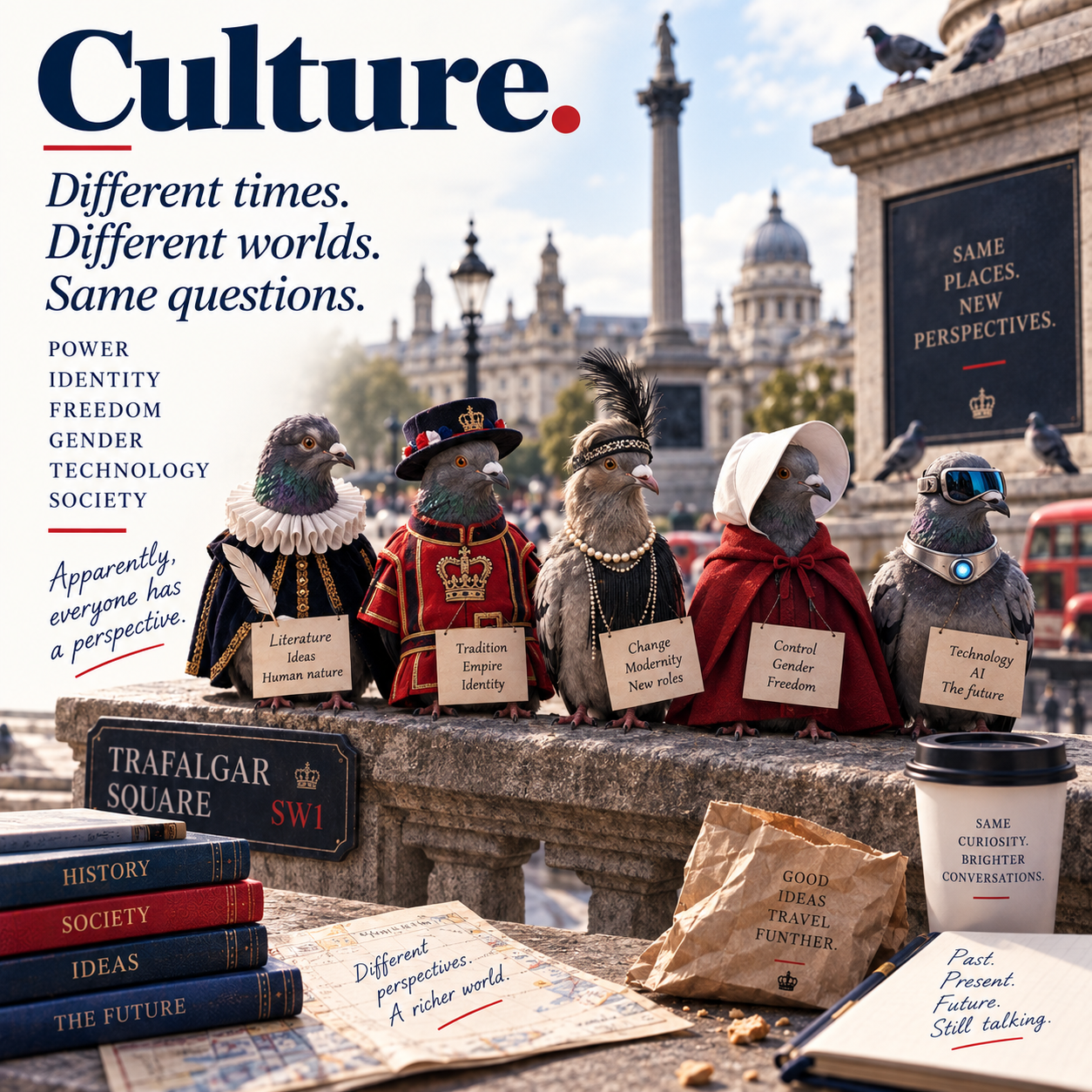 ◎
◎Your World
Media, society, identity, power and the questions that don’t stop being interesting when the lesson ends.
Yesteryear
A carefully staged life. A very different reality. Start with your reaction, follow the evidence, question the easy answers — then predict where the story might go.
OPEN THE FILE →Bring your own mind.
Agree. Partly agree. Disagree. Be unsure. Change your mind. The point is not to guess what C.P. wants to hear.
Individual in Society
Three characters. Three very different obstacles. One question that keeps returning: How much freedom do we really have — and what do we do with it?
MAKE THE CONNECTION →Yesteryear · The Lapse · The Story of an Hour
Enter your Briefing Room.
Choose your course. Your released files are waiting inside.
ENTER BRIEFING ROOM →Some things don’t fit into a subject.
What have we forgotten to ask? →
What do we actually know? →
C.P.’s Desk · Rabbit Holes →